
Root Canal Therapy in Haymarket: What Symptoms Mean You Should Schedule an Exam
August 14, 2026 9:00 amA tooth that needs root canal treatment does not always start with severe pain. Sometimes it begins with a lingering ache after something cold, tenderness when you chew, or a tooth that suddenly has very strong opinions about your morning coffee. Then, over the next few days or weeks, the symptoms may get stronger, disappear for a while, or change enough that you start wondering whether the tooth should be checked.
At Cin Dental in Haymarket, VA, Dr. Mualla and Dr. Almashta can examine the tooth, take the necessary X-rays, and find out whether the nerve and soft tissue inside are irritated, infected, or damaged. If root canal therapy is needed, the treatment removes that unhealthy tissue from inside the tooth and its roots, cleans the space, and seals it. However, plenty of toothaches come from cracks, cavities, bite problems, or other issues, so we first need to find out what is actually causing yours.
Maybe you have started chewing on the other side, letting hot drinks cool down longer, or taking that first sip of ice water a little more cautiously than you used to. If one tooth keeps changing the way you eat or drink, schedule an exam. We can take a look and figure out why it keeps bothering you.
What Is Root Canal Therapy?
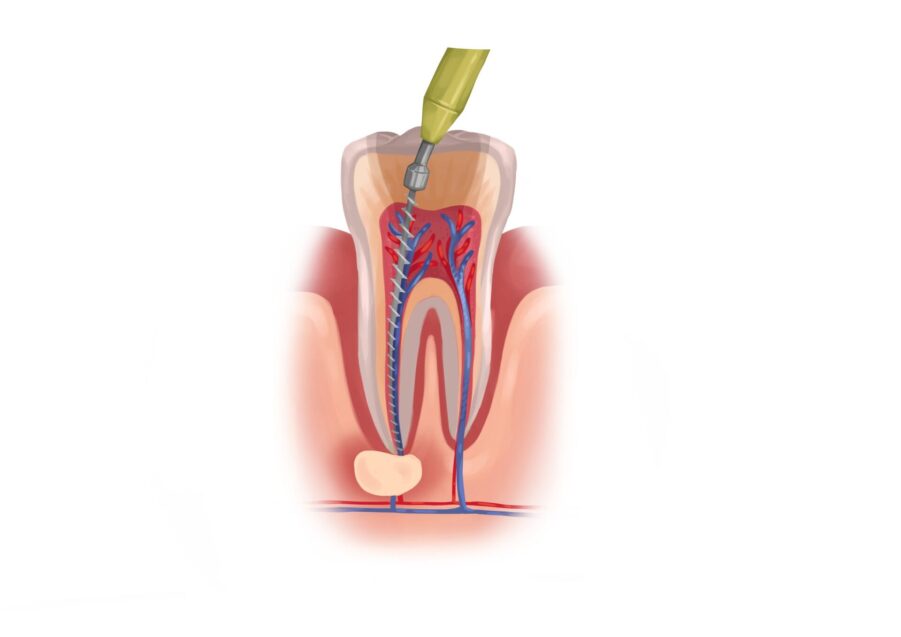
A tooth may look solid from the outside, but there is living tissue inside it. At the center is the pulp, which contains nerves and blood vessels. The pulp extends from the center of the visible tooth down through narrow spaces inside each root.
Those narrow spaces are called root canals. A front tooth may have one relatively simple root canal, while a molar can have several roots with several canals inside them. So when we talk about “root canal therapy,” we are talking about treating those internal spaces after the pulp has become badly inflamed, infected, or damaged.
During treatment, Dr. Mualla or Dr. Almashta removes the unhealthy pulp from the center of the tooth and from the canals inside the roots. Then those spaces are cleaned, shaped, disinfected, and sealed. Afterward, the outside of the tooth is restored so you can continue using it for chewing.
Lingering Sensitivity to Hot or Cold
A quick zing from something cold does not automatically mean you need a root canal. Teeth can become sensitive because of exposed roots, worn enamel, recent dental work, or a cavity. But when the ache continues after the drink or food is already gone, we pay closer attention.
For example, you may take a sip of ice water and notice that one tooth is still throbbing after you have set the glass down. Or your morning coffee may trigger a deep ache that lingers long enough to make you rethink the second sip. That kind of response can happen when the pulp inside the tooth is inflamed and is no longer settling down quickly after a temperature change.
If it keeps happening, or if the sensitivity is getting stronger, schedule an exam. Dr. Mualla or Dr. Almashta can test the tooth and compare its response with nearby teeth. Along with the exam and X-rays, that gives us a better idea of how healthy the pulp still is.
Pain When You Bite or Chew
Pain with chewing can come from several places. A crack, deep cavity, loose filling, inflammation around the root, or an infection can all make one tooth hurt when pressure lands on it. So if biting hurts, we want to look at the tooth rather than assume the nerve is automatically the problem.
At first, the pain may only show up with certain foods. Pasta is fine, but a crusty piece of bread finds the exact spot every time. Or the tooth may hurt more when you release your bite than when you first bite down, which can sometimes happen with a crack.
During the exam, Dr. Mualla or Dr. Almashta can check the tooth for decay, cracks, loose dental work, and tenderness around the root. X-rays may also show changes in the bone surrounding the root if an infection has developed. Depending on what we find, the tooth may need a root canal, a crown, another restoration, or something much simpler.
A Toothache That Keeps Coming Back
A tooth can ache badly one evening and seem almost normal the next morning. Then, several days later, the same discomfort returns after dinner or wakes you during the night. Because it settles down in between, it is easy to keep giving the tooth another day.
However, a break in the pain does not always mean the pulp has recovered. Inflammation can flare and settle, while an infection around the root can also change how the tooth feels from one day to the next. If the same tooth keeps working its way back into your attention, even after a few quiet days, schedule an exam.
Also tell us when you tend to notice it. Pain that wakes you up, gets worse when you lie down, starts after eating, or appears without any obvious trigger gives Dr. Mualla and Dr. Almashta more context. Combined with what we see in the mouth and on the X-ray, those details help us sort out where the pain is coming from.
Swelling Around a Tooth or Gum
If the gum beside a tooth becomes puffy, a small bump appears near the root, or one side of the face starts to swell, call our office. An infection that begins inside the tooth can sometimes travel through the tip of the root and into the surrounding tissues. At that point, the problem is no longer limited to the pulp inside the tooth.
You may also notice a small pimple-like bump on the gum that drains and then seems to disappear. It can come back later, and the area may even feel better after it drains. Still, the infection that caused it may remain around the root.
If swelling is spreading, you develop fever, or you have trouble swallowing or breathing, seek urgent medical or dental care. Otherwise, contact Cin Dental so Dr. Mualla or Dr. Almashta can examine the tooth and determine what treatment is needed.
A Tooth That Has Darkened
A tooth that changes color after an injury can sometimes mean the pulp inside has been damaged. The tooth may gradually look gray, brownish, or simply darker than the teeth beside it. In some cases, the original injury happened months or years ago, so the connection is easy to miss.
Not every darker tooth needs root canal therapy. Old restorations, staining, and other changes can affect color as well. However, if one tooth changes noticeably on its own, especially after a past fall or blow to the mouth, we should check the health of the pulp.
Dr. Mualla or Dr. Almashta can examine the tooth, ask about previous injuries, and test whether the nerve tissue is still responding normally. If the pulp has died or become infected, root canal therapy may be recommended even if the tooth is not currently painful.
A Chipped or Cracked Tooth
A crack can extend from the outside of the tooth toward the pulp. At first, you may only notice a sharp pain when you bite at one particular angle or when you release pressure. However, as the crack worsens or the pulp becomes irritated, sensitivity and aching may become more frequent.
The frustrating part is that the tooth may behave normally for several bites and then catch the wrong angle on the next one. Soon you are chewing more carefully and trying to remember which part of the tooth caused the last jolt. At that point, it is better to stop testing it and let us take a look.
Dr. Mualla or Dr. Almashta can check where the crack is and how much healthy tooth remains. If the crack has reached or irritated the pulp, root canal therapy may be part of saving the tooth. But if the crack extends too deeply below the gumline, the treatment options may be different.
Deep Decay
A cavity starts in the outer layers of a tooth and gradually works inward if it is not treated. Beneath the enamel is a softer layer called dentin, and deeper still is the pulp chamber where the nerve and blood vessels are located. So as a cavity gets deeper, it gets closer to the living tissue inside the tooth.
At first, you may notice sensitivity to sweets or cold. Then the tooth may start aching without a trigger or hurting when you chew. Still, some deep cavities remain surprisingly quiet, which is why a tooth can need significant treatment even when it has never caused a memorable toothache.
X-rays help Dr. Mualla and Dr. Almashta estimate how close the decay is to the pulp. If the nerve tissue is still healthy enough to recover, the tooth may be restored without root canal treatment. However, once the pulp is badly inflamed or infected, removing that tissue may be necessary to keep the tooth.
A Tooth Injury Can Cause Problems Later
A tooth does not have to break for the pulp to be injured. A fall, sports injury, or hard blow to the mouth can damage the blood supply or nerve tissue inside while the outside of the tooth still looks fairly normal. Sometimes the symptoms appear immediately, but they can also show up much later.
That is why we ask about old injuries when one tooth starts behaving differently. Maybe the tooth darkens, develops sensitivity, or gets a small bump on the gum long after the original accident. Once you mention that old fall or sports injury, the history may explain what we are seeing now.
If a tooth was hit in the past and now looks or feels different, tell us. Dr. Mualla or Dr. Almashta can test the pulp and examine the bone around the root. Even an injury that seemed minor at the time can affect the tooth later.
What If the Pain Suddenly Stops?
It may sound strange, but a tooth that suddenly stops hurting is not always a tooth that healed. If the pulp becomes so damaged that the nerve tissue dies, the sharp temperature sensitivity may disappear. However, bacteria can still remain inside the tooth and infection can continue around the roots.
For example, a tooth may ache badly for several days and then become strangely quiet without any treatment. A week or two later, you may notice pressure when you bite, swelling, or a bump on the gum. The symptom changed because the condition inside the tooth changed, not necessarily because the tooth recovered.
So if a tooth was intensely painful and then suddenly stopped, especially without any dental treatment, schedule an exam. Dr. Mualla or Dr. Almashta can test the pulp and check the bone surrounding the roots. That change from painful to quiet is something we want to know about.
Why We Examine the Tooth Before Recommending a Root Canal
Several dental problems can create surprisingly similar symptoms. A cracked filling, cavity, gum problem, high spot in the bite, sinus pressure, or even a neighboring tooth can sometimes make it difficult to tell exactly where the pain started. Because of that, Dr. Mualla and Dr. Almashta first work through the possible sources.
They may check how the tooth reacts to cold, tapping, biting pressure, and other tests. Meanwhile, X-rays can show deep decay, previous dental work, the roots of the tooth, and changes in the surrounding bone. We then compare those findings with what you have been experiencing at home.
Sometimes we find that the pulp is healthy and the tooth needs a filling, crown, bite adjustment, or another treatment instead. But if the pulp is infected or too inflamed to recover, root canal therapy may allow us to remove the source of the problem while keeping the tooth in your mouth.
What Happens During Root Canal Therapy?
First, the tooth is numbed. Then Dr. Mualla or Dr. Almashta makes a small opening through the top of the tooth to reach the pulp chamber in the center. From there, they can access the root canals, which are the narrow internal spaces that run down through the roots.
Next, the unhealthy pulp is removed from both the center of the tooth and those root canals. The canals are then carefully cleaned, shaped, and disinfected so bacteria and damaged tissue are removed from as much of the internal space as possible. Once they are prepared, the canals are filled and sealed.
The number of canals depends on the tooth. A front tooth often has a simpler root system, while a molar may have several roots and several canals that need to be cleaned. After the root canal itself is finished, the tooth is restored with a filling or, commonly for back teeth, a crown to help protect the remaining tooth structure.
What Does a Root Canal Feel Like?
The tooth is numb during treatment, so you may feel pressure or movement, but you should not be feeling the same sharp toothache that brought you in. If something feels sharp or uncomfortable, tell us. There is no benefit in lying there silently wondering whether you are supposed to feel it.
After treatment, the tooth and the tissues around the root may feel tender for a few days, especially if the area was already sore before the procedure. Softer foods and chewing on the other side may feel better while things settle down. Then, as the inflammation around the root improves, that tenderness should gradually ease.
However, call us if pain is getting stronger instead of better, swelling develops, or the tooth feels like it hits before all the others when you bite. A high bite can make a recently treated tooth surprisingly sore. Sometimes a small adjustment is all that is needed.
Do Not Wait for the Tooth to Become Unbearable
You do not need to wait until you are losing sleep or unable to chew before scheduling an exam. Lingering temperature sensitivity, recurring pain, tenderness when biting, swelling, or a tooth that changes color all deserve a look. Even symptoms that are still manageable can point to something happening deeper inside the tooth.
Waiting can also turn a visit you could have worked into your schedule into one you suddenly need today. Toothaches are rarely considerate about weekends, travel, school pickup, or the meeting you already cannot move. If a tooth has started demanding more attention week after week, finding out why is usually easier than continuing to work around it.
So, if something feels different, come see us. Dr. Mualla or Dr. Almashta can examine the tooth, explain what they find, and tell you whether the pulp is involved. Then you can make a decision based on what the tooth actually needs rather than what you fear it might need.
Root Canal Exams at Cin Dental in Haymarket, VA
If one tooth keeps aching, lingers after hot or cold, hurts when you chew, or has started swelling, come see us at Cin Dental in Haymarket. Dr. Mualla and Dr. Almashta can examine the tooth, review the necessary X-rays, and check the health of the pulp and the tissues around the roots. Sometimes the tooth needs root canal therapy, while other times a filling, crown, or different treatment is enough.
Tell us what happens outside the office too. Maybe the tooth only complains when you drink something cold, wakes you at two in the morning, or behaves all day until one bite of dinner lands on the exact spot. Those details help us connect what you have been feeling with what we see during the exam.
If a tooth has been getting your attention lately, schedule an exam with Cin Dental in Haymarket. We can figure out what is causing the symptoms, explain what is happening inside the tooth, and help you address it before it starts rearranging your week. We’d be happy to welcome you in and help you get a clear answer about what that tooth needs!
CONTACT USImage from Authority Dental under CC 2.0
Categorised in: Root Canal Therapy