
Dental Veneers in Haymarket: What They Can Fix and Who Is a Good Candidate
July 15, 2026 9:00 amMost people do not begin thinking about veneers because they want a completely different smile. More often, there are one or two details they have noticed for years. A front tooth may be chipped, slightly darker than the others, or smaller than the tooth beside it. In other cases, several teeth look uneven together, even though each one is healthy.
Dental veneers can change the color, shape, width, or length of visible teeth. They may be used on one tooth or across several, depending on what needs to change and how the smile fits together. However, the decision is not only about appearance. The condition of the enamel, the health of the gums, and the way the upper and lower teeth meet all affect whether veneers are a good fit.
At Cin Dental in Haymarket, VA, Dr. Mualla and Dr. Almashta can examine the smile as a whole and help patients compare veneers with whitening, bonding, orthodontics, or crowns. Sometimes veneers are the right choice. In other cases, another treatment can create the result with less change to the natural teeth.
What Dental Veneers Are
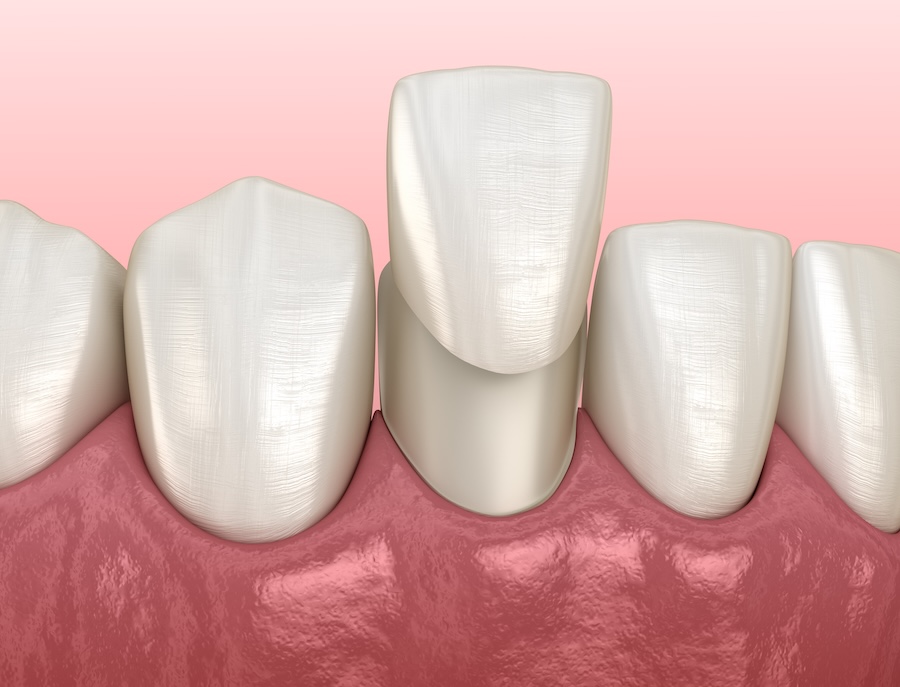
A veneer is a thin covering bonded to the front surface of a tooth. Veneers are commonly made from porcelain or tooth-colored composite material, and both can be shaped to improve the way a tooth looks when a person smiles.
Porcelain can closely resemble natural enamel because it reflects light in a similar way. It also tends to resist staining well. Composite veneers are made from tooth-colored resin and may require less preparation in some cases. They can also be easier to repair, although they may stain or wear sooner.
Because veneers mainly cover the front of a tooth, they are generally used when the tooth is healthy but needs a cosmetic change. A tooth with a large fracture, extensive decay, or a very large filling may need more support than a veneer can provide. In that situation, a crown may be more appropriate because it covers more of the tooth.
The material and treatment plan also depend on the size of the change. A small adjustment to one tooth may call for a different approach than changing the color and shape of several front teeth.
What Veneers Can Improve
Veneers can address several concerns at the same time. For example, they may improve a tooth that is chipped, uneven, deeply discolored, slightly rotated, or noticeably smaller than the surrounding teeth.
They can also help when several front teeth look worn or mismatched. One tooth may be a little short, another may be narrow, and a third may have old bonding that no longer blends well. Treating those details together can create a more balanced smile without making every tooth look identical.
Before recommending veneers, the dentist will look at why the teeth have changed. A worn edge may come from grinding. A dark tooth may have changed color after an old injury. A gap may be related to tooth size, bite, or the position of the roots.
Once those details are clear, it becomes easier to decide whether veneers can solve the concern directly or whether another treatment should come first.
Chips, Wear, and Uneven Edges
Small chips and worn front teeth are common reasons patients ask about veneers. A veneer can rebuild a chipped edge, add length to a tooth that has gradually become shorter, or smooth out the overall line of several front teeth.
Before treatment, however, the bite needs a close look. Grinding, clenching, nail biting, chewing ice, and uneven tooth contact can all place repeated pressure on the front teeth. If those forces continue, they may place the same pressure on the veneers.
For that reason, some patients may need a nightguard after treatment. Others may need a small bite adjustment or orthodontic treatment before veneers are placed.
The amount of length added also has to work with the lower teeth. A tooth can look more balanced and still feel natural, but the shape must be planned so it does not interfere with speaking, chewing, or closing the teeth together.
Discoloration That Whitening Does Not Fully Correct
Professional whitening works well for many common stains, especially those linked to coffee, tea, red wine, tobacco, or natural aging. However, some color changes begin deeper inside the tooth and do not respond as evenly.
A tooth that was injured years ago may develop a gray cast. White enamel spots may stay visible after whitening, while one or two teeth may remain darker than the rest. Veneers can cover these differences and create a more even appearance across the smile.
When only a few teeth will receive veneers, the surrounding natural teeth may be whitened first. The dentist can then match the porcelain to the brighter shade. If whitening is done afterward, the natural teeth may lighten while the veneers stay the same color, which can create a noticeable mismatch.
A very dark tooth also needs careful material selection. The porcelain must hide the deeper color underneath, but it still needs to reflect light like natural enamel. If it blocks too much light, the veneer can look dense or chalky. If it is too translucent, the dark shade may still show through.
The dentist and dental laboratory work between those two extremes to create a shade that blends with the neighboring teeth. That part of the planning is especially important when only one or two front teeth are being treated.
Small Gaps and Uneven Tooth Shape
A veneer can sometimes close a small gap by adding a little width to the teeth on either side. This works best when the space is limited and the teeth are already in a fairly good position.
If the gap is wider, adding too much width may make the teeth look broad or out of proportion. In those cases, orthodontic treatment may create a better result by moving the teeth instead of making them larger.
Veneers can also improve teeth that are naturally narrow, short, pointed, or slightly uneven. Peg-shaped teeth, uneven front edges, and mild differences in length are all common examples.
The shape should still fit the rest of the smile. Lip movement, gumline, face shape, and the amount of tooth visible while speaking all influence what will look natural. Teeth do not need to match perfectly, and a little variation often helps the final result blend more comfortably with the rest of the smile.
Can Veneers Make Crooked Teeth Look Straighter?
Veneers can sometimes improve the appearance of mild rotation or unevenness. For example, a tooth that sits slightly behind its neighbor may be reshaped so the visible surface lines up more evenly.
However, a veneer does not move the root or change the actual position of the tooth. When several teeth are crowded or one tooth sits far forward, orthodontic treatment may be more suitable because it can create better spacing while preserving more enamel.
Sometimes the better plan uses both. A patient may complete clear aligner treatment first and then use one or two veneers to refine shape or color. That approach can take longer, but it may allow each treatment to do the job it handles best.
The dentist will also look at how much enamel would need to be removed to make a crooked tooth appear straighter. If the answer is “quite a bit,” moving the tooth may be the healthier choice.
Healthy Teeth and Gums Come First
Before placing veneers, the dentist needs to make sure the teeth and gums are healthy. Cavities, cracks, and active gum disease should be treated first because cosmetic treatment should not cover a problem that still needs attention.
The gums are especially important because the edges of veneers sit close to the gumline. If the tissue is swollen or bleeding, it can affect both the planning and the final appearance. Once the gums settle, the true shape of the gumline becomes easier to see.
A cleaning, filling, or gum treatment may be recommended before cosmetic treatment begins. Then, when the tissue is healthy, the veneer margins can be planned more accurately and the result can blend more naturally.
Healthy gums also make the veneers easier to maintain. Plaque can collect along the edges, so daily brushing, flossing, and regular dental visits remain part of long-term care.
Enamel and Tooth Preparation
Veneers bond most reliably to enamel, the hard outer layer of the tooth. Traditional porcelain veneers usually require removal of a small amount of enamel so the restorations can fit naturally without making the teeth look bulky.
The amount of preparation varies from person to person. A tooth that already sits slightly behind the others may need very little reduction. A tooth that projects forward may need more space created before the veneer can fit properly.
Because enamel does not grow back, traditional veneers are generally considered irreversible. Patients should understand how much preparation is expected before treatment begins rather than assuming every veneer case is the same.
Teeth with very little enamel, large fillings, deep cracks, or significant wear may need another type of restoration. A crown may offer better support when the tooth has already lost a large amount of structure.
The Bite Needs to Be Part of the Plan
The way the upper and lower teeth meet can affect how long veneers last. A deep bite, edge-to-edge bite, heavy clenching, or grinding may place extra pressure on the front teeth.
The dentist may examine the bite while the jaw is closed and while it moves from side to side. Those movements can reveal pressure points that are easy to miss when the teeth are viewed only from the front.
Some patients can protect veneers with a nightguard. Others may benefit from orthodontic treatment or bite correction before cosmetic work begins.
The finished veneers should feel comfortable during ordinary use. They should not feel too long, strike the lower teeth too heavily, or interfere with speaking and chewing. Temporary veneers can help the patient and dentist test the proposed length and shape before the final restorations are made.
Who May Be a Good Candidate?
A patient may be a good candidate for veneers when the teeth and gums are healthy and the concerns are mainly cosmetic. Common reasons for considering veneers include small chips, worn edges, deep discoloration, mild spacing, uneven tooth size, minor asymmetry, and slight rotation.
The patient should also have enough enamel for bonding and a bite that does not place excessive force on the veneers. If grinding or clenching is present, that does not always rule treatment out, but it may need to be managed first.
Long-term care is part of the decision as well. Traditional veneers may eventually need repair or replacement, and the prepared teeth will continue to need coverage in the future.
A consultation helps determine whether the proposed change can be made without removing more tooth structure than necessary. It also gives the patient a clearer idea of what the final result can realistically look like.
When Another Treatment May Work Better
Veneers are not always the first or only option. Dental bonding may repair a small chip or close a narrow gap with little or no enamel removal, while whitening may be enough when color is the main concern.
Orthodontic treatment may be better for crowding, rotation, or wider spacing. A crown may be recommended when a tooth is heavily filled, badly fractured, or weakened.
Another treatment may also need to come first when there is active decay, gum disease, severe grinding, significant crowding, very little enamel, or untreated pain.
The treatment plan should fit the condition of the teeth. Sometimes veneers are the right answer. In other cases, a smaller treatment can create the improvement without changing several healthy teeth.
What the Veneer Process Usually Involves
Treatment begins with an examination and a conversation about what the patient would like to change. Photos, digital scans, or impressions may be used to study the teeth, gums, smile, and bite.
In some cases, a mock-up or preview can show how proposed changes in shape or length may look. This can help the patient react to something more concrete than a verbal description.
If porcelain veneers are chosen, the dentist prepares the teeth and takes a scan or impression. Temporary veneers may be placed while the final restorations are being made.
At the placement visit, the dentist checks the shape, color, fit, and bite before bonding the veneers in place. Small adjustments may be made so the teeth feel comfortable and look balanced with the rest of the smile.
Before treatment begins, patients should know how many teeth will be treated, how much enamel will be removed, whether temporary veneers will be used, and whether whitening should happen first. It is also worth asking how the final shade will be selected, whether a nightguard is recommended, and what future maintenance may involve.
What Helps Veneers Look Natural
Natural teeth have subtle differences in color, shape, texture, and translucency. They are not one flat shade, and they are rarely perfectly symmetrical.
Veneers that are too bright, too smooth, or too uniform may stand out from the surrounding teeth. The shade should fit the patient’s complexion, lips, lower teeth, and overall smile.
One veneer has to blend closely with several natural teeth. Treating a larger group gives more control over color and shape, but the teeth should still have enough variation to avoid looking artificial.
Patients may prefer a polished, symmetrical result or a softer look that keeps more of their natural tooth character. Talking about that preference before treatment helps the dentist plan the shape, texture, and shade accordingly.
Photos can help show what a patient likes, although the final design still needs to fit that person’s face, bite, and natural smile. A shape that looks attractive in someone else’s photo may not feel right once it is placed into a different smile.
Caring for Veneers
Veneers need regular brushing, flossing, and dental visits. The porcelain or composite surface cannot develop a cavity, but the tooth around it still can.
Plaque can also collect near the gumline and cause inflammation. Keeping the margins clean helps protect both the gums and the natural tooth underneath.
Patients should avoid using veneered teeth to open packages, bite fingernails, chew ice, or hold hard objects. These habits can chip veneers in much the same way they can chip natural teeth.
Coffee, tea, red wine, and tobacco may stain the natural teeth around porcelain veneers. Composite veneers may also collect surface stains over time.
Patients who grind or clench should wear a nightguard when recommended. This can help protect both the veneers and the natural teeth from repeated pressure.
How Long Veneers Last
Veneers can last for many years, although they do not last forever. Their lifespan depends on the material, bite, enamel support, home care, grinding habits, and accidental damage.
Porcelain usually holds its color and surface finish longer than composite. Composite may be easier to repair when a small area chips.
Over time, a veneer may loosen, chip, stain, or need replacement because the gumline or underlying tooth has changed. Regular dental visits give the team a chance to check the edges, bite, gums, and surrounding teeth before a small concern becomes more difficult to address.
Patients considering veneers should think of them as a long-term restoration rather than a one-time cosmetic purchase. That does not make them a poor choice, but it does mean future care should be part of the conversation from the beginning.
Frequently Asked Questions About Dental Veneers
Can Veneers Fix Crooked Teeth?
Veneers may improve mild rotation or unevenness by changing the visible surface of the tooth. However, more significant crowding is usually better treated with orthodontics because veneers do not move the roots.
Do Veneers Damage Natural Teeth?
Traditional veneers usually require removal of a small amount of enamel. This permanently changes the treated teeth, although the goal is to preserve as much healthy structure as possible.
Can Veneers Cover Very Dark Teeth?
Yes, although the material must be chosen carefully. It needs to hide the underlying color while still reflecting light in a way that looks natural.
Can Cavities Form Under Veneers?
Yes. Decay can develop near the edges if plaque remains there or the margin breaks down over time.
Can One Front Tooth Have a Veneer?
Yes, but matching one veneer to several natural teeth requires very careful shade, shape, and texture planning.
Will Veneers Stain?
Porcelain resists staining well. Composite may discolor more easily, and the surrounding natural teeth can still change color.
Are Veneers Painful?
Patients are kept comfortable during preparation. Some temporary sensitivity may occur afterward, especially while wearing temporary veneers.
Can Veneers Be Removed Later?
Traditional veneers usually require enamel removal, so the teeth generally need continued coverage after treatment. Replacing the veneer later is more common than returning the tooth to its original condition.
Dental Veneers at Cin Dental in Haymarket
Veneers can improve chips, discoloration, small gaps, worn edges, mild crookedness, and uneven tooth shapes. However, the best plan depends on the health of the teeth, the amount of enamel, and the way the bite comes together.
At Cin Dental in Haymarket, VA, Dr. Mualla and Dr. Almashta can examine your smile and compare veneers with bonding, whitening, orthodontic treatment, or crowns. The conversation can include how much preparation may be needed, how the final shade will be chosen, and what type of result would feel natural for you.
Schedule a cosmetic dentistry consultation to learn which option fits your teeth, your goals, and the amount of treatment you feel comfortable pursuing.
CONTACT USCategorised in: Dental Veneers